KOMSEC

News

The Charities (Amendment) Bill 2022

Posted in Category(ies): Charities

The Charities (Amendment) Bill 2022 was published by The Minister for Rural and Community Development, Heather Humphries on 29 April 2022. The purpose of the Bill is “to provide for a number of amendments to the Charities Act 2009. The proposed amendments aim to improve the ability of the Charities Regulator to conduct its statutory functions, ensuring more proportionate regulation leading to greater public trust and confidence in the charities sector.” The Bill is expected to be enacted later this year.

Some of the provisions include the following;

  • Establish the promotion of human rights as a charitable purpose.

  • Increase the threshold for filing of a full set of Financial Statements from a maximum gross income or expenditure of €100,000 to €250,000 (aligning with the Companies Act 2014).

  • The accounting standard “Charities Statement of Recommended Practices (SORP)” will be compulsory. An exemption will be permitted for charities with a turnover of less than €250,000.

  • Definition of charities trustee to be amended to exclude Company Secretaries (who hold no other office in the charity).

  • Introduction of new statutory fiduciary duties for trustees to act in good faith, avoid conflicts of interest and exercise an objective standard of care, skill and diligence when advancing the charitable purpose of the charity, mirroring similar duties of Directors under the Companies Act 2014.

  • New Definition of the term “Member”. This change extends the requirement to maintain a Register of Members to unincorporated associations.


Click here for full text of the Charities (Amendment) Bill 2022

More Detail...


Director Fiduciary Duties – common sense?

Posted in Category(ies): Directors


The phrase “Fiduciary Duties of a Director” is used so often but I still meet some Directors who feel inhibited to ask just what does the phrase mean.  

Fiduciary Duties are set out in the Companies Act 2014 and are intended to help a Director comply with his/her duties as a Director.

  • Duty to disclose any interest Director may have in contracts made by the company.

  • Act in good faith in interests of the company.

  • Act in accordance with the Company’s Constitution.  Although not stated in the Companies Act 2014 a Director would also have to act in accordance with Shareholder’s Agreement if applicable.

  • Only act in accordance with the law.

  • Do not use the company’s property, information or opportunities for his/her own benefit or that of anyone else without specific approval as set out in the Act.

  • Cannot restrict a Director’s power to exercise his/her independent judgement without specific approval or permission as set out in the Act.

  • Avoid conflict between the Director’s duties to the company and his/her own personal interests.

  • Exercise care, skill and diligence. 

  • Have regard for the interests of its employees in general and the interests of the members. 

Fiduciary Duties may sound onerous but, they are a key resource in helping us as Directors to focus on our duties and responsibilities to act in the best interests of the company, its members and employees. For me, Fiduciary Duties are just common sense and should help all Directors to manage an effective and progressive company.

More Detail...

Annual Return time is around the corner..

Posted in Category(ies): Annual Returns


  • Check status of your company’s filing in the Companies Registration Office is correct
  • Check if any of the directors have changed their personal details. The two most common changes are where directors have changed home address or their list of directorships are not current.
  • When a director moves home address a statutory form must be filed noting the new address and effective date of change.
  • The list of directorships should include all directorships held worldwide, past and present, within past 5 years.
  • Have the Financial Statements ready for filing.
  • Confirm the designated signatories for the Annual Return will be available to sign when required, i.e. a specific named Director and the Company Secretary.
  • The Annual Return should include the PPSN of each Director.
  • Where a Director does not have a PPSN, they must instead provide a VIN (Verified Identity Number).
  • A VIN can be applied by submitting a notorised VIF Form in advance with the Companies Registration Office. The turnaround for registering notorised VIF Forms is approximately one week.  
  • Annual Returns without either a PPSN or VIN number will be rejected.
More Detail...

know your numbers

Posted in Category(ies): Companies Registration Office

KNOW YOUR NUMBERS – PPS / VIF number – New filing requirements imminent…..


Reality – imminently (due to commence on the 23rd of April but a temporary postponement was put in place by the CRO) … all directors of any company incorporated in Ireland must provide his or her Personal Public Service (PPS) number or Verification of Identity (VIF) number when filing certain documents in the Companies Registration Office.

What is difference between PPS and VIF number – PPS number is available to any individual tax resident in Ireland. VIF number is established where an individual is not tax resident in Ireland.

Scam Awareness – this is new filing requirement has already generated publicity and offers a unique opportunity to scammers. Be very careful how you engage with anyone asking for your PPS number.

Why now – the requirement to provide a PPS number is contained in the Companies (Corporate Enforcement Authority) Act 2021 but, it has taken time for the technology and verification processes to be designed and tested.

Why is it required – the purpose is to add an additional layer to verify the identity of a director when filing documentation in the Companies Registration Office.

Is compliance really necessary – providing the PPS number is a mandatory requirement which means failure to comply is a Category Offence. It also means any statutory filings will be rejected which would have knock-on effects in terms of dealing with banks, losing audit exemption, etc.

Who sees PPS/VIF number – the person preparing the statutory form for filing will enter the PPS/VIF number. When filed electronically the PPS/VIF number will never be visible to any staff in the Companies Registration Office or members of the public.

What now – where the PPS or VIF number is not already on record KomSec will contact its clients directly.   Additional blogs will be issued as the process gets up and running.


More Detail...

The public can no longer access beneficial ownership information

Posted in Category(ies): Beneficial Ownership


One of the biggest talking points at the time the Beneficial Ownership Register was put in place was the fact that the public could access it. This meant the public could see the names of the beneficial owners, what percentage shareholding they might hold and even their dates of birth and home addresses!

All that has now changed further to an unexpected European Court Judgment last week. Its ruling means that from now on only ‘Designated Persons’ can search the Register and obtain beneficial ownership details.

From a practical point of view, the ruling will not affect the vast majority of companies. They are still obliged to ensure both their internal and external Beneficial Ownership Registers are completed in full and kept up to date. The banks as a ‘Designated Person’ will continue to be able to search the Register and (in our experience) refuse to/delay providing credit facilities to companies if they have queries over the information lodged.

In summary, even if Joe Public can no longer have a peep, there is still no excuse not to register your Beneficial Ownership information and keep it updated!

More Detail...

New Charities Classification System

Posted in Category(ies): Charities

Charities Classification System

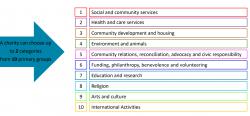
The Charities Regulatory Authority launched a Classification System on 14th November 2022 (as part of Charities Week) which broadly mirrors classification systems in other jurisdictions.

The purpose of the system is to improve functionality of the Charities Register, provide clarity on registered charities, improve data for research.

Charities to self-determine classification and rely on a “best fit” as it is not possible to achieve a perfect system. It is important to note that Classification will not put a limit on the types of activities a charity can carry out to further their charitable purpose.


How does it work?

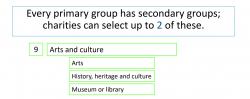
In the example provided by the Charities Regulator, a museum for example would choose category “Arts and Culture” and can then select two secondary groups “History, heritage and culture” and “Museum or library”.

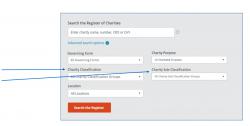
How to search charities using the classification System

A search facility will be introduced when the database is populated. This will be of benefit to funders, researchers and potential volunteers.

What should charities do now?

• Directors to agree on classification and record decision at a Board Meeting.

• Log into MyAccount to complete and submit form

• Once off process (unless charity wishes to amend it in future)

• Automatic registration of classification

• Immediate update to Register of Charities


 More Information

There’s a new Classification Section on their website with more information which includes:

More Detail...

CORPORATE ENFORCEMENT AUTHORITY – different name – no difference?

Posted in Category(ies): Latest News


The Corporate Enforcement Authority (established in July 2022) replaced the Office of Director of Corporate Enforcement (ODCE) which was no longer fit for purpose. With the creation of the CEA it would be easy to think same old, same old.


It seems to me that the CEA has seized the opportunity to morph into a much more dynamic, focused, and independent organisation which has hit the ground running. Personally, I think one of the most important developments for the CEA is its ability to control its own recruitment requirements so that it can source specialist staff capable of dealing with the intricacies of corporate crime.


White collar crime sounds quite bland but as far as I am concerned it is just as bad as any other crime. A corrupt director may not have physically knocked over an old lady to steal her handbag but stealing the old lady’s pension is worse.   I was never a great advocate of the “walk of shame” one saw for alleged corporate criminals in other jurisdictions but, have to admit I am beginning to think there is some merit in seeing the public arrest with HANDCUFFS of individuals accused of corporate crime.

According to the United Nations it is estimated that US$1 trillion is paid in bribes and US$2.6 trillion stolen through corruption. Combined these sums represent 5% of annual Global Gross Domestic Product.

This year the Irish Government gave one of the biggest Budgets in the history of the State with commentators saying it was made possible by income from Corporation Tax. Whatever one thinks of the Budget if Ireland does not maintain a reputation as a strong reputable country to do business in there will be no Corporation Tax to argue about. There are more than enough challenges for Irish companies dealing with the devasting war in Ukraine, energy costs, housing, climate, etc. Without a strong corporate reputation Ireland will no longer attract business and once a reputation is lost the way back is grindingly hard for everyone.

An effective CEA will be to the benefit of us all.


More Detail...

Discrepancy Notices – what is going on?

Posted in Category(ies): Latest News


When a company or individual becomes aware of a discrepancy in beneficial ownership details filed with the Central Register of Beneficial Ownership (CRBO) there is an option to file a Discrepancy Report.

History of Discrepancy Notices filed in the CRBO

  • In 2020 – just 2

  • In 2021 – over 700

  • In 2022 – over 600 

What is going on and why such an extraordinary surge?


It looks like the trigger event was the enactment of the Criminal Justice (Money Laundering and Terrorist Financing) (Amendment) Act 2021 in 2021. This Act transposed EU Money Laundering Directive into Irish law thus bringing Ireland in line with current European AML and countering financing of terrorism (“AML/CFT”) framework.  

Companies are not allowed to be told who has filed the Discrepancy Notices so who is filing and why remains a matter of conjecture. It seems likely though Discrepancy Notices are being filed in a knee jerk reaction to the implementation of the Criminal Justice Act on the basis of “to be sure, to be sure”.

In the event you receive a warning email from the CRBO make sure you respond ASAP to ensure you remain within all relevant deadlines. Do not assume there is a discrepancy. Check the beneficial ownership details as in all likelihood your details are fine. Provided you engage proactively and in a timely manner with the CRBO, with luck, all you will end up with is a story to tell. Surprising, irritating but absolutely fixable!


More Detail...

Definition of a Charity Board Succession Plan

Posted in Category(ies): Charities


 Definition of a Charity Board Succession Plan

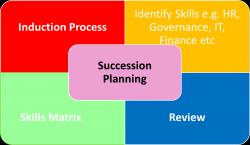
A board succession plan is a document that sets out the process to be followed when a Charity Trustee resigns. It’s very useful to prepare for when a Trustee’s term limit is coming up or when a Trustee departs unexpectedly. The Charity Regulatory advise that a Trustee’s term should be no more than 9 years. They have recently issued excellent guidelines on Trustee Term Limits and Succession Planning, click here.

  1. Induction

  • Induction should aim to introduce a new Trustee to the organisation, aims, values and provide an overview of the challenges its facing.

  • Understand their legal duties, responsibilities and personal liability.

  • A visit to the Charity and meet staff, volunteers, beneficiaries (if possible) and Trustees.

  • Provide an induction pack, to include set of financial statements, recent minutes, copy of strategic plan and budgets etc. Further information on an Induction Pack from Charity Regulatory Authority here.


Check out the Charity Regulatory Authority Guidance on Induction and Recruitment here


2. Identify Skills Required

This will vary, most charities will need Financial expertise for example. You will need to consider the experience you need, for example do you employ staff? If so, you will probably need HR expertise and support etc. This exercise is very helpful when you’re considering new Trustees


3. Skills Matrix

Circulate the Skills Matrix and ask your Trustees to complete (tick under the skills-sets they already have). You will find that there is a broad variety of skills and experience amongst the Board. Once this exercise is completed, you can easily identify the “gaps” which will help pinpoint the exact set of skills you’re looking for.


4. Review

Periodically review the Induction Process (with feedback from Trustees) and also periodically review the Skills Matrix, which will need to be adapted with the needs of your charity and Trustee changes etc.


Resources

The Charity Regulatory Authority have excellent resources available on their website, links are below.

Succession Planning click here

Induction Pack Checklist click here. Induction and recruitment click here

More Detail...

Check Yourself – Corporate Health

Posted in Category(ies): Boards


Everywhere we turn there seem to be advertisements advising us to check our personal health for this that and the other. No doubt all excellent advice but do we ever take time to check our corporate health as directors? It seems to me getting either one wrong will impact on us all to some extent.


There are no blood pressure cuffs when it comes to corporate health but there are a few checks we as director can all do to at least get started.


  • Management accounts – should be circulated and read by Directors on a regular basis.

  • Board meetings – should be held at least quarterly where Directors consider the overall direction of the company and do not get bogged down with the nitty gritty which is the role of the Management Team.

  • Chairperson – how is that role managed by the Board and by the Chairperson. He/she should be capable of ensuring all participants have an opportunity to be heard, and that meetings do not run on for ages. Unfortunately, we have all been at meetings where certain individuals like to hear their own voice no matter the relevance of their words.

  • Risk Register – does your company have one, and if not why not? A Risk Register (properly managed and regularly reviewed) can save an awful lot of headaches. For example, if you have a supply contract that has to be renewed annually you need to be able to negotiate this ahead of time and not after the event.

  • Insurance – when were the company insurance policies last reviewed and at what level of detail. It is always surprising how little directors know about insurance cover even on a basic level such as whether or not they are covered under their own company’s director and officer liability insurance.


  • Statutory filings – does the Board have a timetable of statutory filings even covering basic things such as filings with the Revenue Commissioners – Companies Registration Office – Central Registry of Beneficial Ownership.


Having the basics in place can help to ensure issues are dealt with in a timely manner with minimum fuss. Now don’t tell me that doesn’t help keep your blood pressure down!


More Detail...